<Greeting />useStatepropsCLAUDE.mduseEffectclaude
Free · no sign-up · written, not recorded
Courses you read with an editor open.
The long-form version of the writing: ordered, hands-on, and free. Start at lesson one
and build something by the end.
-
Course
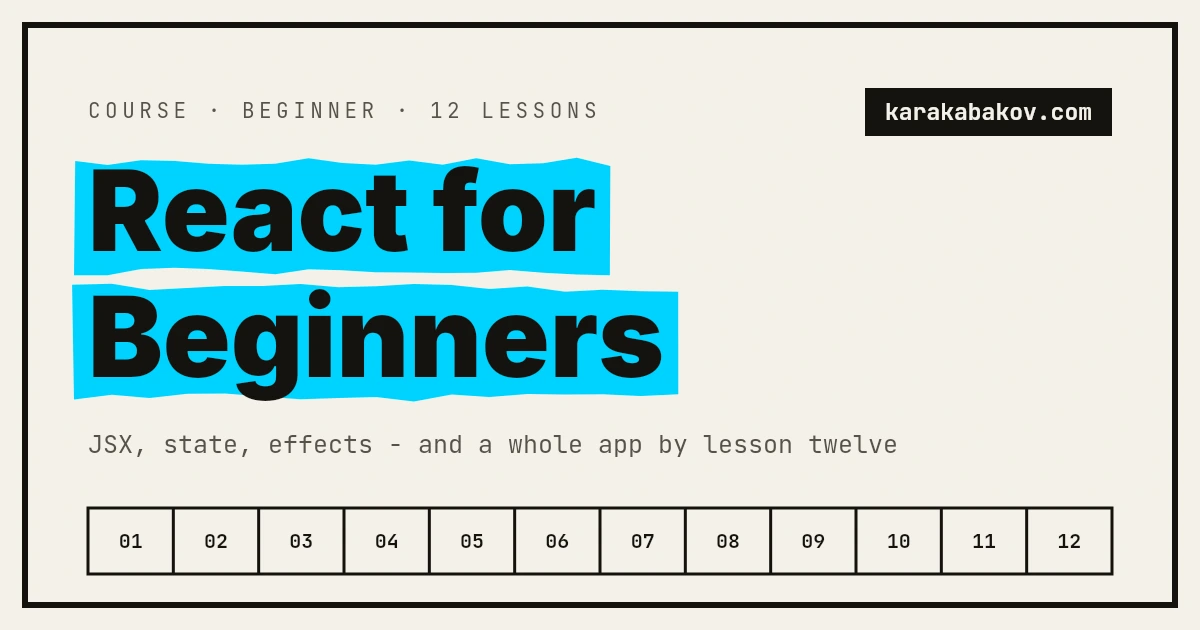
Twelve lessons from why React exists to building a whole app, taught on React 19 with hooks and nothing else. Free, no sign-up.
- Beginner
- 12 lessons
- ~2 hours
- Free
See every lesson →
-
Course
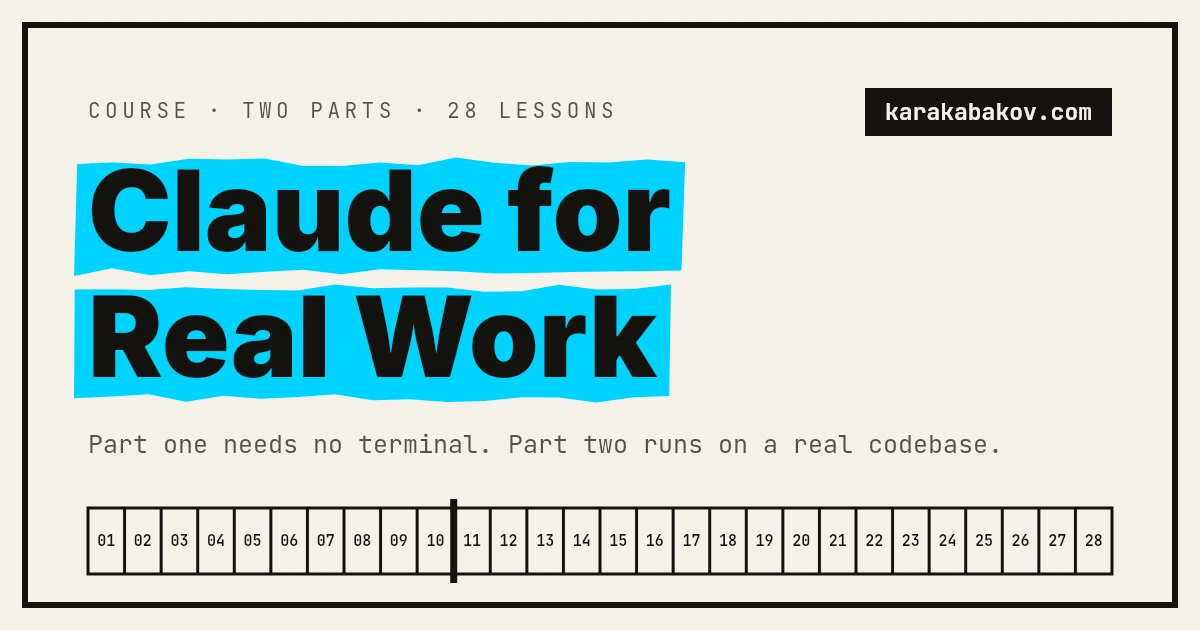
Twenty-eight lessons on Claude and Claude Code, every one ending in something you do on your own machine. Free, no sign-up.
- Beginner to intermediate
- 28 lessons
- ~5 hours
- Free
See every lesson →
Before you commit two hours Who each one is for
Both courses are free, need no sign-up and are written rather than recorded - a lesson
is a page you read with an editor open beside it, and every one ends with something
you do. Start at lesson one; each lesson assumes only the ones before it.
Beginner · 12 lessons · ~2 hours
Who React for Beginners is for
You know HTML, CSS and enough JavaScript to be dangerous. Twelve lessons later you will have built a working app and understand why every piece of it is there.
Before you start
- HTML and CSS
- JavaScript basics: variables, functions, arrays, objects
- Comfort running a command in a terminal
What you will be able to do
- What React actually solves, and when reaching for it is the wrong call
- Components, JSX and props - the whole composition model
- State, events and forms: making a page respond to a person
- Where state belongs, and why the answer is usually higher up
- Effects and data fetching, without the mental model everyone gets wrong
- Building a complete app from a mock-up, start to finish
See every lesson
Beginner to intermediate · 28 lessons · ~5 hours
Who Claude for Real Work is for
Part one is Claude the app, and needs no terminal. Part two is Claude Code, on a real codebase with real mess in it - tests that fail, a file that is too long, and a README that lies.
Before you start
- Part one: nothing. If you can use a browser you can do it.
- Part two: a terminal, git, and a language you can read
What you will be able to do
- What a language model can and cannot see, and why long conversations go wrong
- Getting a useful answer on the first ask instead of the fourth
- Running Claude Code on a codebase you did not write
- Project memory, context and cost: the three dials that decide what a session costs
- Skills, commands, hooks and MCP, and when each one is the wrong reach
- Catching the mistakes it makes confidently
See every lesson
Free · no sign-up · no email to hand over Start at lesson one and build something by the end.